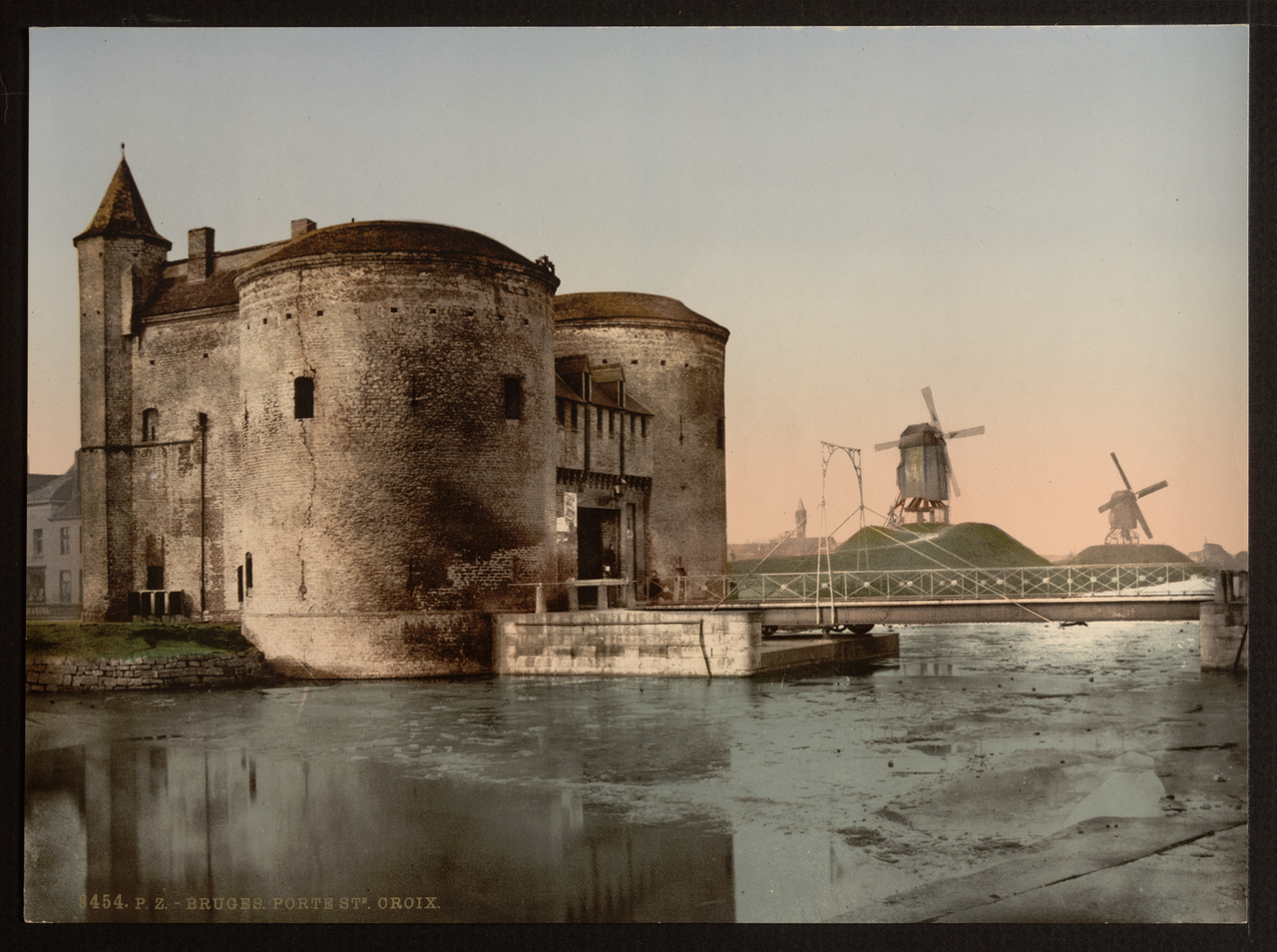
Valois Burgundy and Flemish Cities
Philip the Good and Charles the Bold maintained peripatetic courts moving between Bruges, Brussels and Lille. Bruges offered harbour access, luxury trades and a merchant elite willing to finance ducal display. The city hosted the Order of the Golden Fleece chapters and major peace congresses.
Ducal administration integrated Flemish urban constitutions with princely prerogative. Tax grants from the Four Members of Flanders funded military campaigns and court salaries, creating recurring negotiation between towns and the duke.
The 1429 Treaty of Arras and 1468 marriage festivities of Charles the Bold mark Bruges as a diplomatic venue of European significance.
Ceremonial Entries and Public Ritual
Joyous Entries staged allegorical tableaux along processional routes — temporary arches, fountains and scripted speeches affirmed urban privileges while celebrating ducal authority. Chronicles describe cloth-of-gold costumes and music by court composers.
Tournaments in the Markt attracted international knights; Bruges archives document prize lists and heraldic achievements. Such events boosted innkeepers, armourers and tapestry workshops.
Artistic Patronage Networks
Court patronage channelled commissions to painters, illuminators and goldsmiths documented in guild records. Manuscript workshops produced books of hours for ducal family members and foreign allies.
Tapestry weavers in Brussels and Bruges supplied narrative cycles for ducal residences. Designs circulated as paper cartoons attributed to court artists and visiting Italians.
Explore: Flemish art during the Golden Age
Economic Foundations of Court Life
Wool from England and Iberia arrived via Bruges brokers who financed ducal loans. Italian merchant colonies — notably the Datini and Medici agents — provided credit instruments that underpinned court expenditure.
Luxury consumption in Bruges supported silversmiths, furriers and spice importers. Municipal quality controls protected export reputations for cloth and finished goods.
- Harbour tolls: Funded quay maintenance and civic building
- Exchange fairs: Fixed calendar for international banking settlements
- Guild regulation: Standardised apprenticeship and masterpiece requirements
Legacy in Urban Memory
Modern Bruges interprets Burgundian history through museums, processions and the Holy Blood relic tradition. Historians debate continuity between ducal spectacle and contemporary heritage tourism.
Academic biographies of Philip the Good and Charles the Bold reference Bruges council minutes, providing primary sources for university curricula across Flanders.